Services for Fire + SecurityIcon Fire Security

Experienced consultancy for making high-risk standards work in the real world

Security and fire compliance can no longer be treated as someone else’s responsibility. Post-Grenfell Tower Fire legislation, tightening global regulation, and growing client scrutiny mean businesses are now expected to demonstrate how their products actually perform. Not just on paper, but in real-world conditions where failure has serious consequences. This shift places greater responsibility across the supply and installation chain.

SCCS helps ensure that responsibility is reflected in how fire and security standards are implemented in practice.
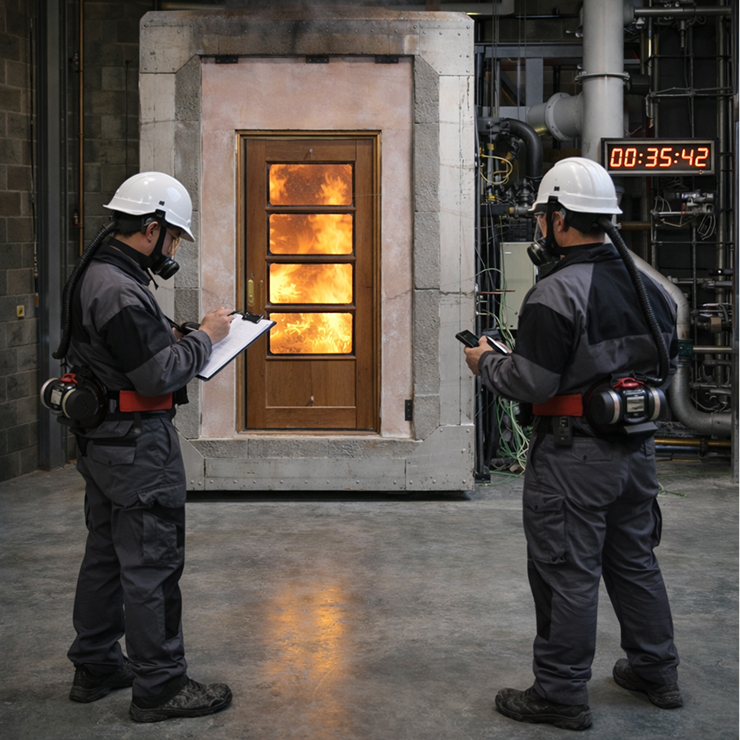
Fire Door Testing
Security Institute Affiliate Logo

Affiliate of the Security Institute
since 2012

Fire and Security demand more than box-ticking

Fire and security standards exist to ensure products perform when it matters most.

Testing and certification demonstrate capability under controlled conditions. Ongoing compliance depends on that capability being preserved through manufacture, installation, and maintenance.

When standards are treated as paperwork exercises, risk increases. When they are treated as operational responsibilities, standards do what they were designed to do.

Fire compliance in practice

SCCS supports organisations delivering fire-rated products and systems, where declared performance must remain reliable beyond testing and certification.

Support focuses on:

Icon of Manufacturing Controlling tested configurations throughout manufacture
Icon of detail Ensuring installation reflects approved detail
Icon of declared performance Maintaining regimes that preserve declared fire performance
Icon of system Treating fire stopping as part of the complete system

Fire certification schemes + standards

Fire compliance is typically demonstrated through third-party certification schemes operated by bodies such as BM Trada, covering manufacture, installation, maintenance, and fire stopping. These schemes reference standards including BS EN 1634-1, BS 476-22, BS 8214, and BS 9999, linking testing, design, installation, and maintenance into a single compliance framework.

Common standards include:

Icon of Q Mark

Q-Mark Fire Door Manufacturers’ Scheme

Consistency of manufacture aligned with tested specifications

Icon of Q Mark

Q-Mark Fire Door Installation Scheme

Installer competence to ensure correct performance on site

Icon of Q Mark

Q-Mark Fire Door Maintenance Scheme

Ongoing inspection and maintenance to preserve performance

Icon of Q Mark

Q-Mark Fire Stopping Installation Scheme

Maintaining compartmentation integrity

Security compliance in practice

SCCS supports organisations delivering security-rated products and systems, particularly where higher-risk projects demand proven, real-world performance.

Support focuses on:

Icon of Performance Correct application of security ratings such as LPS 1175
Icon of Manufacturing Maintaining tested configurations through manufacture
Icon of detail Reviewing installation to prevent unintended vulnerabilities
Icon of identifying risk Identifying adaptations or site conditions that introduce risk

Security certification schemes + standards

Security compliance is typically demonstrated through testing and certification operated by bodies such as BRE, covering physical security, glazing, and attack resistance. These standards are widely used across government, infrastructure, finance, data, and other high-risk environments in the UK and internationally.

Common standards include:

Icon of BRE

LPS 1175 (Physical Security)

Resistance to forced entry using defined tools and attack methods

Icon of BRE

LPS 1270 (Security Glazing)

Intruder-resistant glazing aligned with physical security ratings

Icon of PAS24

PAS 24 (Domestic Security)

Enhanced security performance for doors and windows, including Secured by Design projects

Icon of BRE

LPS 1673 (Attack Ratings)

Graded attack resistance classifications based on time delay and severity

How SCCS helps

SCCS works as the practical link between businesses and certification bodies such as BM Trada and BRE, helping ensure requirements are not only understood, but translated into clear, real-world implementation. The focus is on making certification achievable in live operating environments, sustainable over time, and commercially useful rather than restrictive.

By aligning technical requirements with practical reality, SCCS helps ensure that fire and security standards translate into products and installations that perform as intended, not just systems that pass audits.

Why independent oversight?

Certification bodies assess compliance against defined criteria. They do not step back to review how standards are applied day to day across teams, sites, and supply chains.

Independent consultancy provides that perspective

SCCS brings trained, experienced, independent eyes, with a deep understanding of fenestration, certification frameworks, and how compliance holds up under scrutiny in real-world conditions.

Commercial and Operational benefits of raising standards

Fire and security done well protect people, projects, and reputation. This isn’t about paperwork. It’s about proving capability when it matters most.

Icon of Performance Certified Products perform reliably in real-world conditions
Icon of failure Risk of failure, rework, or challenge is reduced
Icon of reputation Reputation is protected when scrutiny is highest
Icon of confidence Confidence increases across supply chains and clients
Icon of projects Higher-risk and regulated projects become more accessible
Icon of global Regulated and international markets are unlocked
Icon of value Higher-value specifications are supported
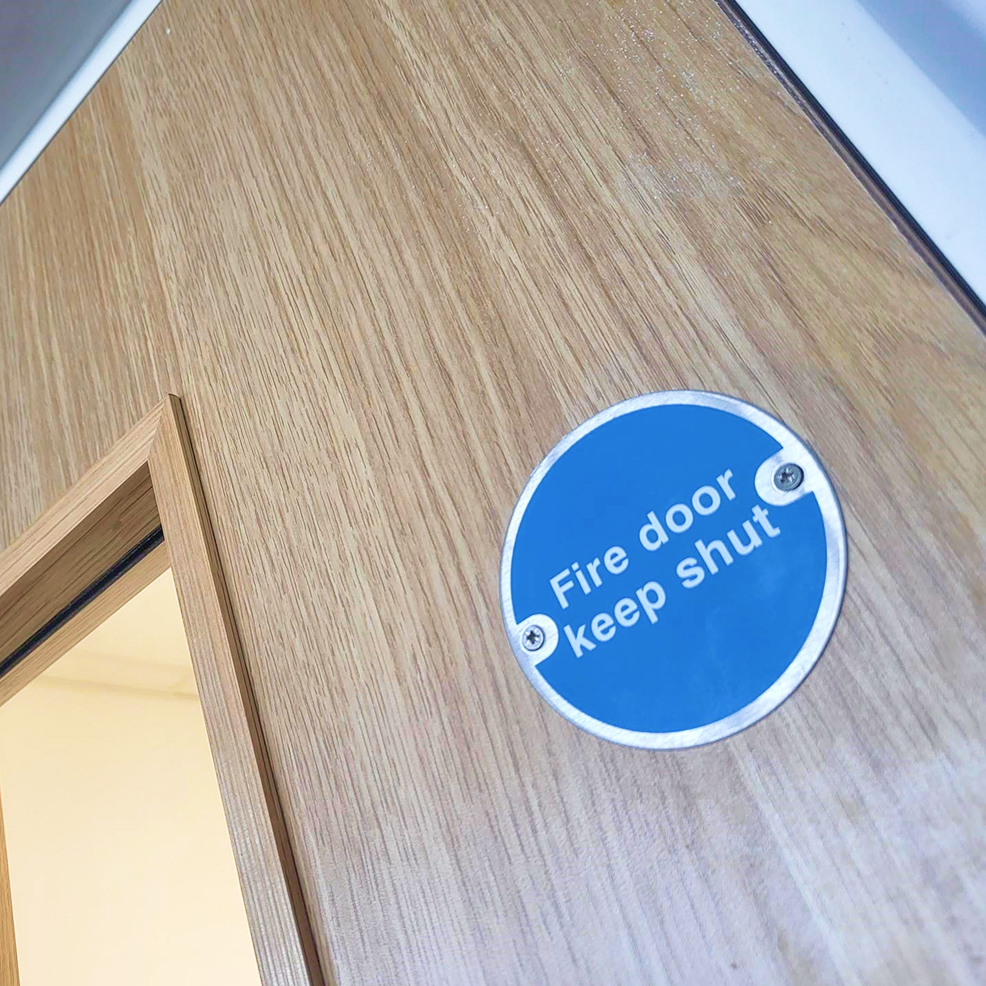
Photo of a Fire Door Keep Shut sign
Security Institute Affiliate Logo

SCCS has been an affiliate of
the Security Institute since 2012

Photo of Stephen Collings

Turn Fire and Security risk into responsible commercial opportunity

Get in touch to discuss how fire and security compliance can be strengthened across your organisation or network.